The Pigeon Loft
Pigeons for
Sale
Fancy Pigeons for sale
Irrespective
of its geography, shape, size or structure, the loft must provide the pigeons with:
- Sunlight during the day.
- A secure place to rest at night.
Sunlight and the elevated flight
Sunlight is a basic requirement for all birds and it is easy to see the positive effect that the sun has on the
health and well being of our pigeons. On sunny days the birds look so much brighter and more alert than on overcast
or wet days when the birds look depressed and disinterested.
It is known that direct sunlight provides birds with the vitamin D, that is so necessary for bone, feather and
reproductive health, but it must have other positive effects on the metabolism and immune system, because the birds
look so strong when they have access to direct sunlight. For this reason, it is recommended that every bird in the
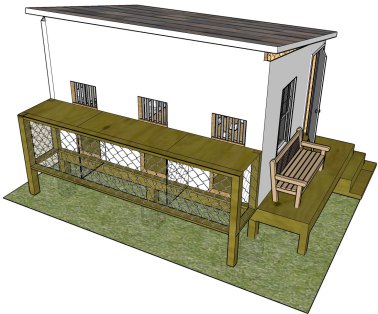
loft has access to direct sunlight. This is best achieved by an elevated flight.
The elevated flight is ideal for baths, protecting the loft from wetness and the race birds from potentially
harmful ground germs associated with free lofting. The elevated flight is usually opened directly to the breeding
loft, whereas the flight of the race loft must be closed off at night from the rest of the loft during the race
season. The flight quickly becomes a favourite rest and recreation area for both the breeding and race birds,
playing an important part in strengthening the loft bonding process of pigeons.
Security and rest at night Free online Magazine The special attention that is given to
providing the pigeons with a loft that promotes complete rest at night will reward the fancier with a healthier
flock and more consistent race results. Both the breeding and race lofts must protect the birds from moisture,
temperature extremes, too little or too much air movement, predators, noise, fumes, light and other
disturbances, so that the birds can rest, especially at night. Proper rest is a major pre-requisite for
continuing pigeon health and race performance.
The breeding loft
The design requirements of the breeding loft are simple compared to the race loft. The best breeding loft is very
open, because breeding takes place during the warmer months. At night the birds usually rest comfortably in their
nest boxes and during the day a large open flight provides the adults and babies in the nest with the health
benefits of direct sunlight. The open breeding loft improves the circulation of fresh air and promotes a drier
loft, which in turn improves the breeding performance. Breeding is far less stressful to the pigeon than racing and
maintaining their health is so much easier, because the birds are not exposed to the outside diseases and hardships
of the race basket.
The race loft
The race birds are exposed to many more stresses than the breeders and require much more rest to remain healthy.
Consequently, the requirements for a successful race loft are more exacting and complicated than for the breeding
loft and must provide the race team with the necessary rest to recover from their strenuous physical exertions. The
darkness of night provides the pigeon with the time to rest and the conditions in the loft at night are of the
utmost importance if the pigeon is to fully recover from the exertions of the previous day.
The conditions inside the race loft which promote restful sleep at night are:
No rapid fluctuations of humidity and temperature.
Good ventilation (i.e. the air circulation is good, the air is fresh, not heavy or stuffy, no drafts and no
dust).
The pigeons numbers are controlled i.e. no overcrowding.
There is no wetness in the loft.
The loft is clean.
Temperature and humidity control
To protect the fit racing pigeon from losing form, the temperature in the loft must be above 10 and below 30
degrees Celsius, and the humidity kept below 65%. These are the conditions that favour continuing health and known
as the thermo-neutral zone for the pigeon.
In most lofts, it is the humidity, more than the temperature, which determines whether the birds rest or not at
night. Humidity measures the amount of moisture in the air, irrespective of the air temperature, but it is the high
humidity (greater than 65%) associated with a temperatures below 15 degrees Celsius that most affects the pigeons
ability to rest. The pigeon loses form and becomes susceptible to illness when it does not to get adequate
rest.
The droppings in the loft are the best indication of the humidity levels. In the healthy loft, a low humidity
(less than 55%) gives a consistently nutty brown dropping, whereas a higher humidity (greater than 65%) will
produce green watery droppings. At night-time, when the pigeons need to rest, there is always a rise in the
humidity, because as the temperature drops the humidity rises. This explains the droppings turning wet and green
the morning after a cold humid night, but which then turn nutty brown by the afternoon as the day warms up and the
humidity drops. No two lofts, even if they are identical, will have the same humidity levels, because the humidity
inside the loft relates directly to the humidity outside the loft. The controlling factor of humidity is the
location (or geography) of the loft. Often fanciers will re-create their previously successful loft design when
they move from one house to another but find that they are no longer successful flyers. The only difference is the
location of the loft.
High humidity risk lofts:
- Lofts near water (ocean, lakes, rivers, waterways, drainage channels, swim pools).
- Lofts adjacent to large open low lying areas (grassy areas, foggy areas).
- Lofts without sunshine to dry the ground (under trees, in valleys, on the wrong side of the hill and no sun
until late in the afternoon).
- Lofts in high rainfall areas.
These lofts require a loft design that stops the outside humidity (moisture) entering the loft.
Insulation is the first step to controlling fluctuating temperatures and high humidity inside the loft. It is
the moisture drops of condensation appearing on the inside of uninsulated walls and ceilings that increase the
humidity inside the loft to the very high levels that predispose the race birds to restlessness and respiratory
illnesses. The insulation of the walls and ceiling will stop this condensation and allow you to control respiratory
diseases with the minimal use of medicines.
In high humidity areas, shutting the loft up at night or when it is raining is a good method of controlling the
humidity inside the loft (louvres are commonly used), but the air circulation and the air quality inside the loft
must not be compromised. Too often the loft is completely shut up with no thought about air circulation. The
resulting stale loft makes the race birds lethargic due to lack of oxygen.
Heaters at night are beneficial for the race team. The healthy team remains in top form when the loft is closed
at night by keeping it warm and dry. However, it is better to have a very open loft in flocks recovering from
respiratory disease to prevent the “respiratory” germs accumulating inside the loft from re-infecting the race
birds.
Oil based bar heaters are safe and effective to use when the temperature drops below 12 degrees Celsius and are
used to prevent a loss of form by keeping the air and dry. Dehumidifying machines are also available, but the noise
may prevent the birds from full rest.
Hygrometers can be installed to monitor the humidity within the loft, but often the salts in the grit or mineral
powder are equally effective in monitoring humidity above 65%. These salts attract moisture. For example, F-vite
darkens and becomes granular when the humidity is too high and grits become dark and wet with moisture.
Ventilation
When the air inside the loft is not as fresh as the outside air, then there is a ventilation problem.
The traditional Australian loft is open at the front and gets good race results in areas with low humidity
(non-coastal and inland regions, South Australia etc.). Such a loft requires little other ventilation other than
vents on the back and side walls of the loft. Place the vents under the perches rather than at the top, so that the
air does not pass over the birds resting in the perches. The flow of air over the birds created by incorrectly
placed vents is referred to as a draft and causes illness by preventing the birds from resting.
The creation of proper ventilation in enclosed lofts is more difficult to achieve and in dry areas it is often
better to avoid enclosed lofts. However, in high humidity and very cold areas the loft must be enclosed at night to
maintain the form of the fit race team, although it is opened up as much as possible during the day. The best lofts
can be opened up during the day and closed up at night, when it is raining or during cold humid weather.
More ventilation is required in closed lofts than open lofts. Ceiling or wall ventilation fans are often used to
improve the circulation inside the loft. Vents placed on the back and side walls near the floor are open during the
day and on warm nights and closed when it is wet or cold. Double-check the quality of the air inside an enclosed
loft by asking an asthmatic friend to stand inside and pass an opinion as to the freshness of the air.
Pigeon numbers
Overcrowded lofts do not race to their true potential. Overcrowding increases fighting, creates restlessness and
increases the staleness of the air. Overcrowded lofts have consistently good droppings, although the birds may be
healthy. Often healthy nutty droppings return when the numbers are decreased. The best race results occur when the
numbers are kept around 25 birds per 6 foot x 6 foot by 6 foot loft.
Wetness in the loft
Waterproofing the loft is a priority, because wet floors endanger the health of the birds. Fit race birds
immediately lose form and often succumb to coccidiosis three days after the floor gets wet. Disinfecting or
cleaning the loft using water must be reserved for warm days or allowed to dry whilst the birds are out exercising.
Concrete slabs hold water and are not recommended for race lofts and must be designed to drain and dry quickly when
used beneath elevated flights during the race season.
Clean loft
Pigeons love a clean loft and rest better when the perches and floor are cleaned free of droppings. Sand on the
floor looks good, but is not recommended during the cold months of the racing season. At this time the birds may
suddenly over-engorge on it and lose form because of the resulting “gut ache”. Pigeons love to lie down on straw
but it must be perfectly fresh, clean and be free of dust or moisture. Black marks and a musty smell to the straw
indicates mould on the straw, which can damage the pigeons airsacs when inhaled.
The loft is cleaned at least once and even better twice daily during the racing season.
Twice daily cleaning allows the fancier to monitor the health of the race team very closely. A change in the
droppings is then recognised very early and the appropriate remedy (either rest, water cleanser, medicines, loft
heaters etc.) can be quickly and effectively prescribed. The design of the loft must be such that scraping is made
as easy as possible. The floor should be perfectly flat and smooth and the perches must be wide enough and brought
out from the wall for easy scraping.
Loft position
The best lofts are positioned in the yard to get the most amount of sunlight from the day during the racing season.
In Australia, the best direction to face the loft is between North West to North East, because the sun moves
northward during the winter months of racing. Lofts need as much sunlight as possible. They also need space to
breathe fresh air and are best away from trees, fences and be elevated.
The resting pigeon
The best designed lofts create an environment that is so relaxing that during the day and at night-time the birds
lie down on the ground or on the perch with their wings hanging loose. The compartment sizes should not be too
large, but small and low enough for the fancier to catch the birds easily without chasing them around the loft. The
race team is tamer and more relaxed in a loft with smaller compartments. The best size sections are 6 inches higher
than the fancier, 6 feet deep and 5 feet wide.
Get 12,000 different plans and blueprints for building a
loft.
Loft materials for ceilings, walls and floors
In high humidity areas the ceiling and walls of the pigeon loft must be lined if consistent racing results are to
be enjoyed. Masonite and wood are better insulators than metal. The best floor for racing is made of wood (form ply
or marine ply) because it is a good insulator, stays warm, and is smooth for effective scraping. It can be
unscrewed and replaced with wired floors during the off season if required. Wood floors are harder to disinfect.
Concrete floors are not recommended in the race loft because they are cold and retain moisture, but they are good
for the breeding loft and can be used for the race loft if they are centrally heated. In high humidity areas wire
floors are not recommended for racing because the droppings beneath the wire accumulate moisture and grow fungus,
which causes moulding disease. They are acceptable in dry areas and during the breeding season, but must be treated
for fungus and insects regularly.
This article, courtesy of Pigeon Insider. See above for more insider.
Click on the book to look inside
Pigeons and doves like most pets need attention. You might want to consider the time these
feathered friends are going to consume. Racing pigeons need care every day. If you go on vacation, someone will
have to look in on them for you. If you only keep a few, say less than 10, you could be gone several days by simply
filling their water and feed to last those few days.
Being able to build your own loft will save you lots of money. If you have a carpenter friend who is willing
to help you will also be a benefit. Some may just have to pay someone to build their loft for them. You will also
need to build perches for the birds to sit on, nests boxes for them to breed in, feed trays, doors, and walls. All
of these items can be purchased from suppliers.
Your loft should have sections inside to separate the birds. If you do not separate the males from females
you will end up with pigeons coming out of your ears. This can happen before you even realize its going on. I have
walked out to my loft and been slapped in the face by the realization that I have alot of birds. If you only have
one section then you could take the eggs away from them as they lay. This is not healthy for the hens to be always
laying eggs, so if you can, build a wall between the sexes. This wall could be just a wire fence or a solid
barrier.
|